Strategic Visualization
Strategic Visualization for a Future Shock Workshop
We captured complexity in real time, creating clarity and consensus for action.

Strategic Visualization · Vision maps · Graphic facilitation
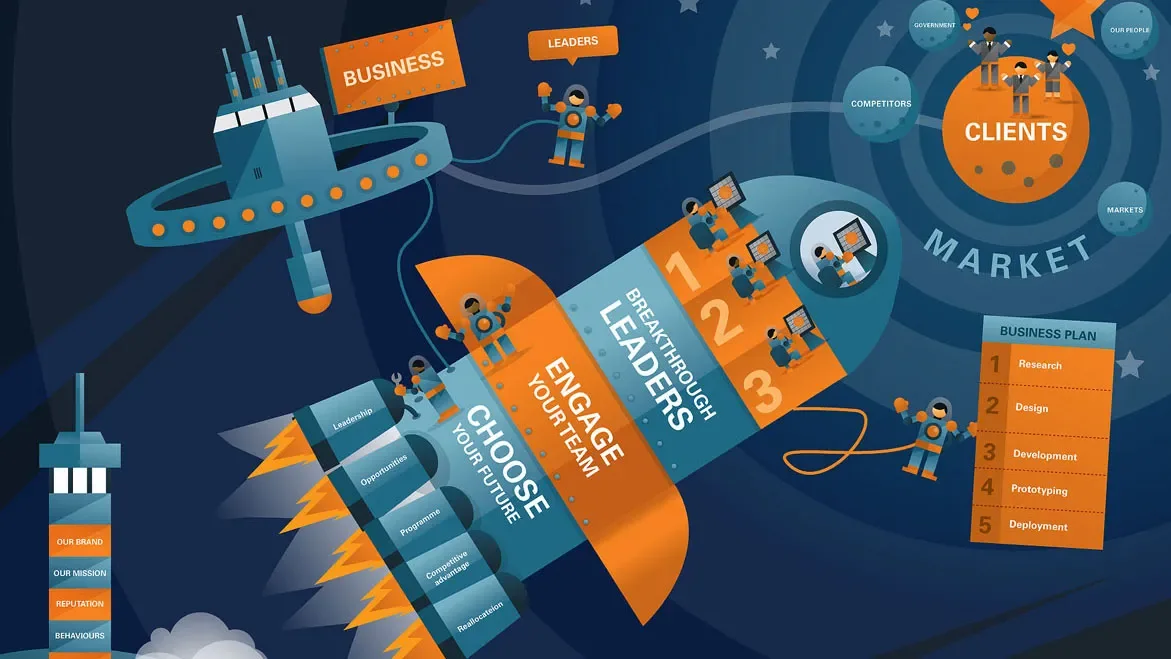
Our business-literate illustrators and graphic facilitators turn strategy decks and change programs into vision maps, roadmaps and journey maps — so everyone can see where you’re going, find their place in the picture and know what to do next.
Drawn with your leaders in the room, then rolled out as film, interactive media and campaigns by the same studio — with Ludic Advisory’s strategy and events team behind us.
Used by Fortune 500s, governments and NGOs. Trusted by teams at Accenture, Deloitte, EY and Imperial Brands.
Drawn with your leaders
Why it works
The research is blunt. Most people can’t name their organization’s priorities — and change goes far better when leaders tell one clear story, together.
28%
of the executives and managers responsible for carrying out strategy could list three of their company’s strategic priorities.
Source: Sull et al., MIT Sloan Management Review, 124 organizations
20%
of US employees strongly agree that their senior leaders set clear priorities for the organization.
5.8×
more likely to succeed: transformations where the CEO communicates a compelling, high-level change story.
6.3×
more likely to succeed when senior leaders share aligned messages about the change.
Source: McKinsey, 1,487 respondents
One picture gives a strategy what those numbers say it’s missing: priorities people can name, a clear story and leaders telling it the same way.
What we make
Each one starts with the same question — what do people need to see, understand and do? — and ends with a picture they can find themselves in.
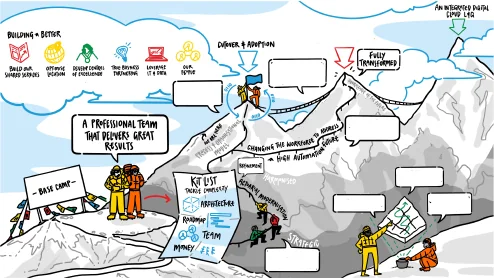
Your ambition and the road to it, drawn as one scene people can walk through — so everyone sees where you’re headed, and why.
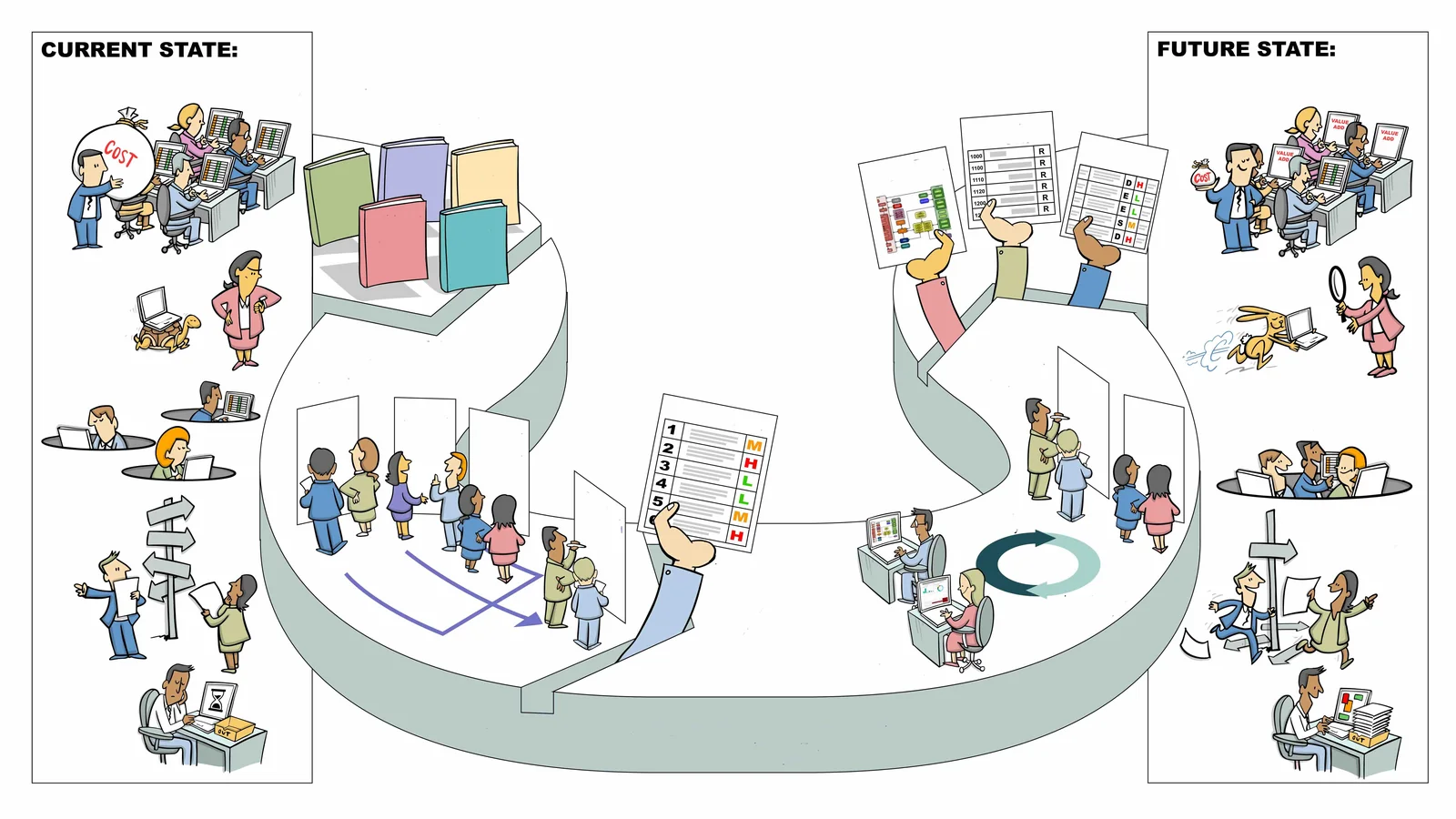
The route from current state to future state, stage by stage, with the shifts each team makes along the way.
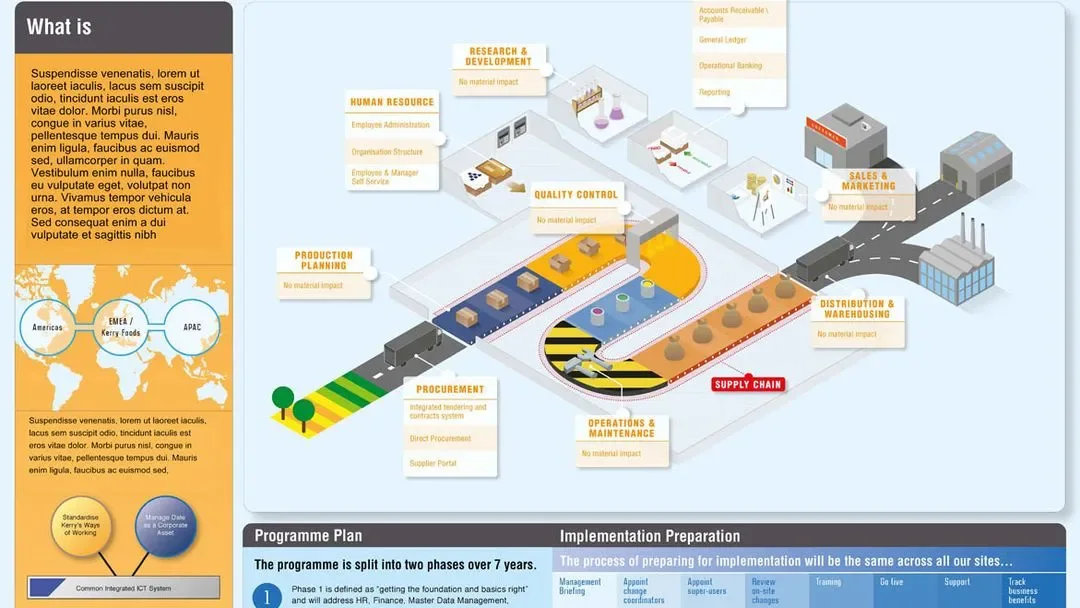
A customer’s, an employee’s or a product’s path, end to end, with the moments that matter marked — so teams see where they make the difference.
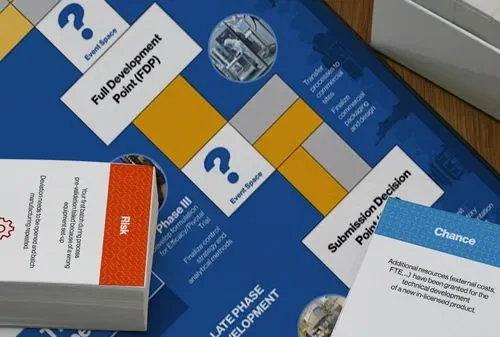
Table-sized maps that small groups explore together, with questions and cards, so people discover the strategy instead of being told it.
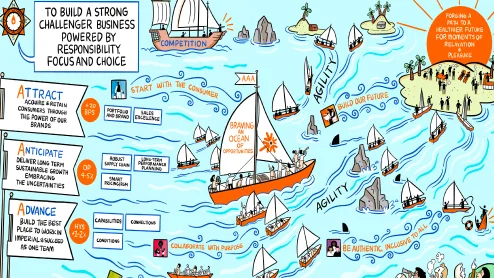
A whole system — its people, its parts and its tensions — in one detailed illustration a team can point at and argue with.
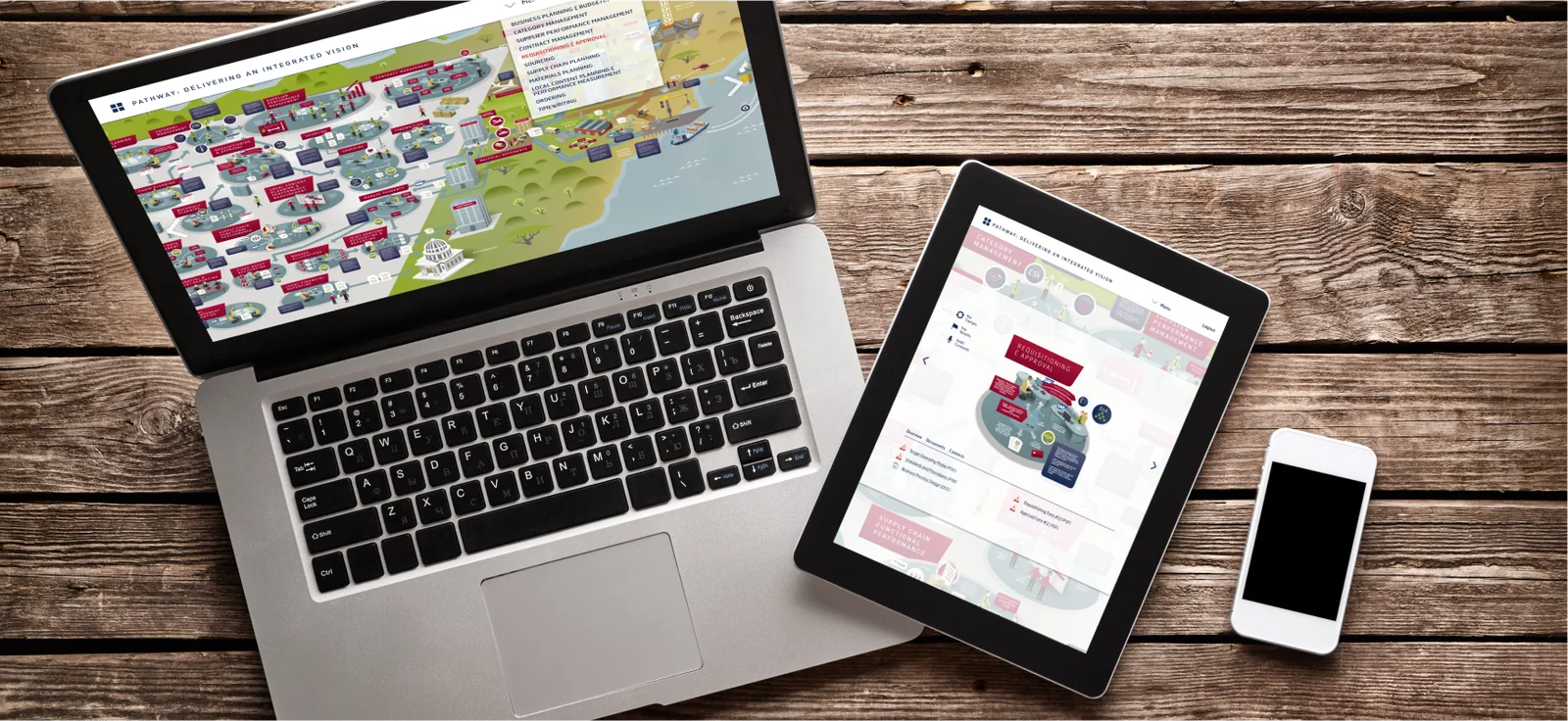
The map made explorable: people scroll and zoom around the picture and tap into the detail behind each part, in whatever order suits them.
From deck to map
Most strategies arrive as a deck: an ambition, priorities, a roadmap, standards, ways of working. We find the story that holds them together and give every part a place on one map — so people see how it fits, and where they fit.
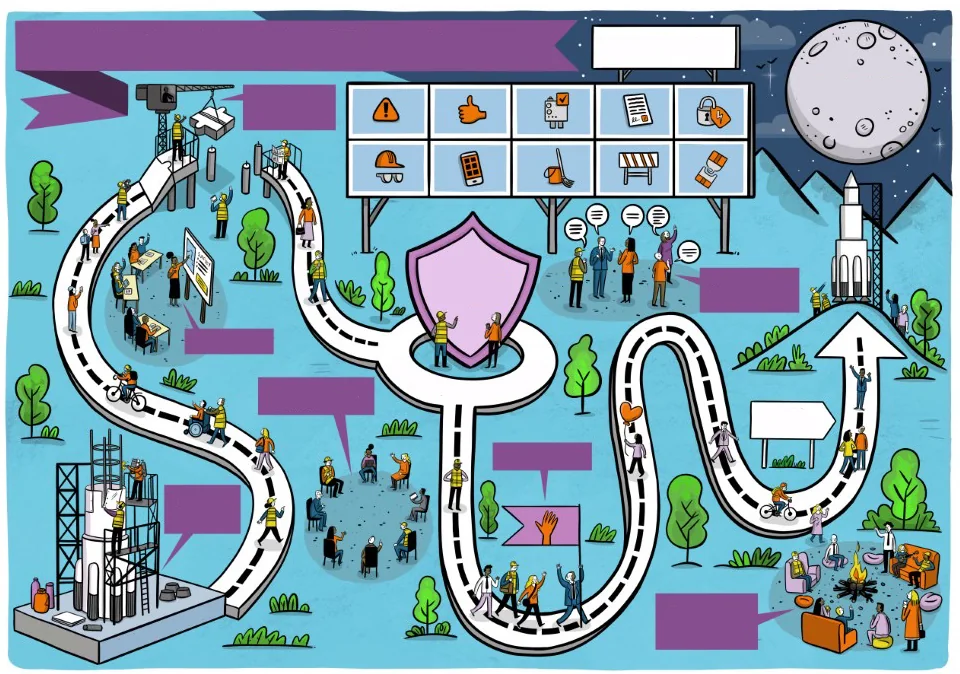
Slide 5 · Where we are today
The tower still going up at the start of the road: honest about what’s being built first.
Slides 11–18 · Priorities & roadmap
One road, its stages and its turns in order — so every team can point to where it is now.
Slide 19 · Safety first
The shield at the center of the roundabout: the one thing every lap comes back to.
Slides 23–28 · Our ten standards
Ten icons on one billboard, readable at a glance from anywhere on the map.
Slides 29–33 · Ways of working
Circles of people talking along the way: the huddles, workshops and check-ins that keep the road moving.
Slide 3 · Our ambition
The rocket and the moon: the ambition, visible from every point on the road.
Illustrative: how the parts of a typical 40-slide strategy deck can find a place on one map. The labels are left blank on this version of the map.
Where we’re different
Plenty of studios can draw a strategy. Fewer can sit in the room while it’s argued over — and then turn the picture into everything a rollout needs.
01
Our graphic facilitators run working sessions with your leaders and draw as the debate happens, so the map carries their words and their decisions — and they own it before it’s finished.
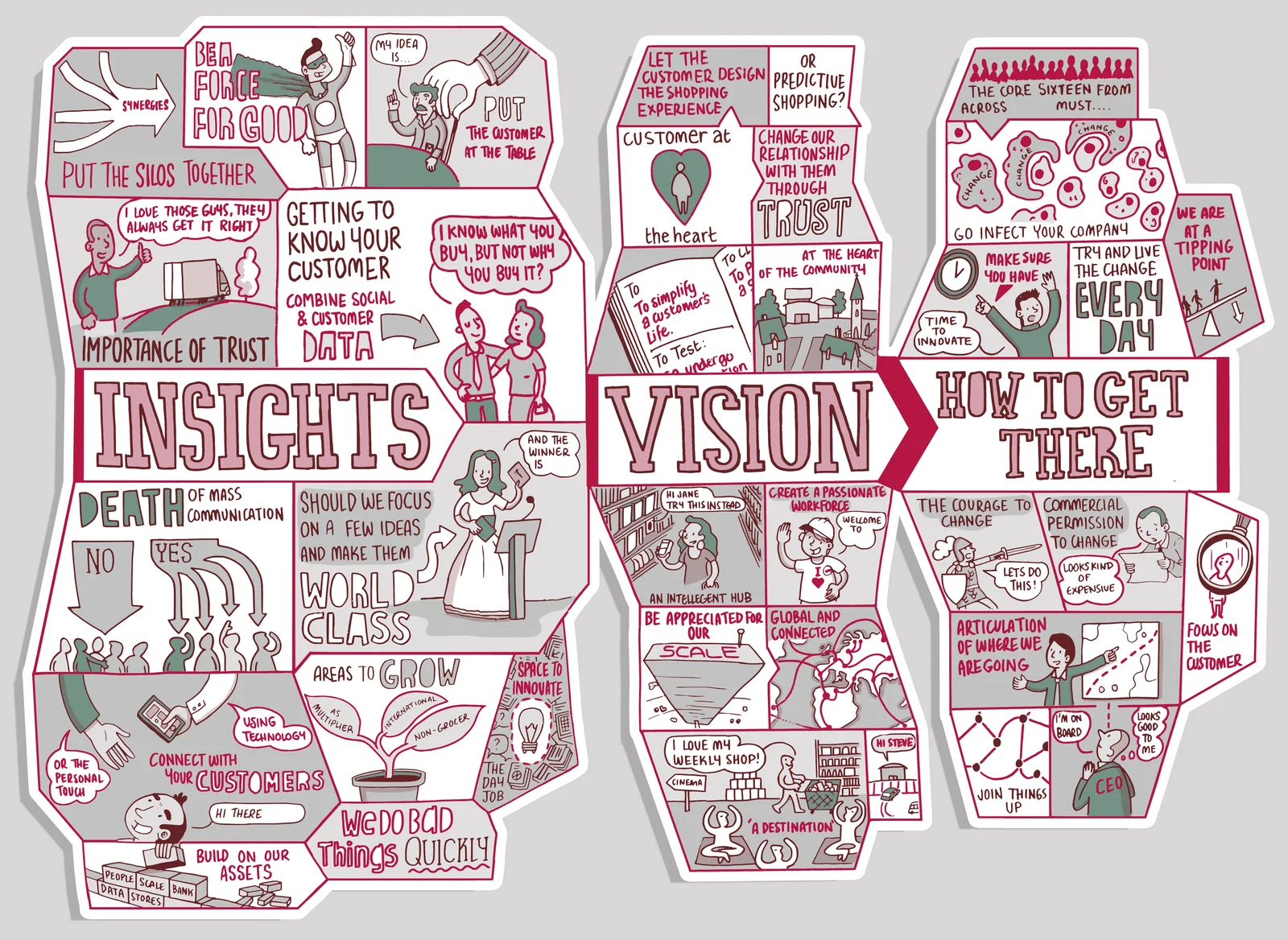
For a leading retailer’s Future Shock workshop we drew the journey from insights to vision to prioritized actions, live.
02
Our global network of business-literate creatives works in strategy sessions and leadership forums, so they follow the argument, not just the words. Ludic Advisory’s strategy and events team can shape the leadership conversation before we draw, and run the launch after.
Part of the Ludic Group, with Ludic Advisory and the SmartLab event platform.
03
Most strategy pictures end as a poster. Ours can become the film, the interactive map, the board game, the campaign and the scribed launch event — made by the same studio, in the same style.
One team across scribing, design, film & animation, games, strategic visualization and comms campaigns.
04
We match the artist to the style, choose a metaphor your people care about and deliver in the languages they speak — for head office or the factory floor.
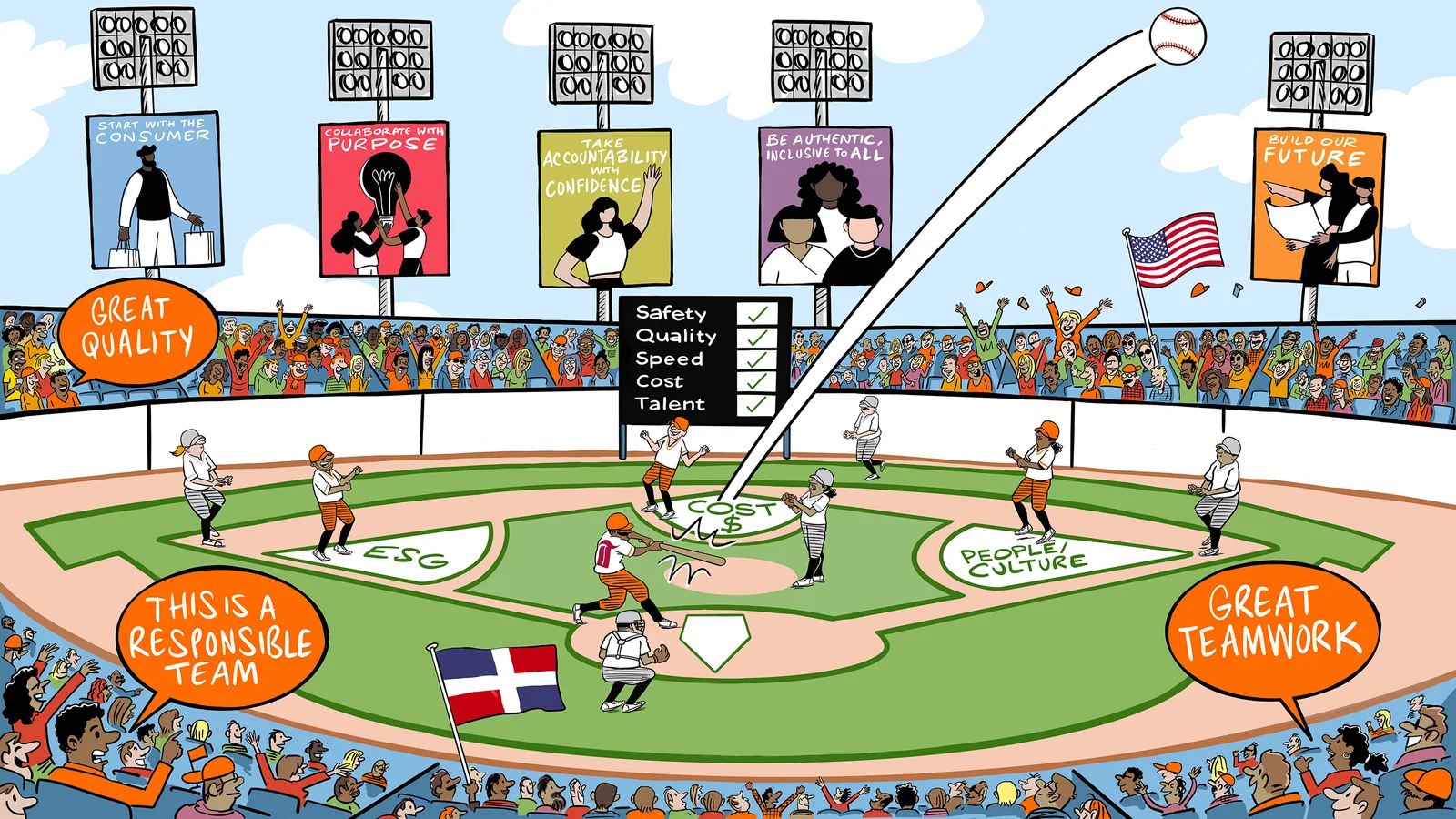
A bilingual, baseball-themed vision for a global retailer’s factory team in the Dominican Republic.
How we work
Four steps, with your people in every one of them.
01
We read the strategy, talk to the people who own it and find the story that holds it together — and a metaphor your people will recognize.
02
Our graphic facilitators work with your leaders in a workshop or offsite — live, digital or hybrid — drawing as the group decides.
03
The right artist for the style, sketches you react to early, then the finished map, refined until it reads at a glance.
04
Printed big for the walls, cut for slides and the intranet, translated, animated or made interactive — and launched at an event if it should be.
The work
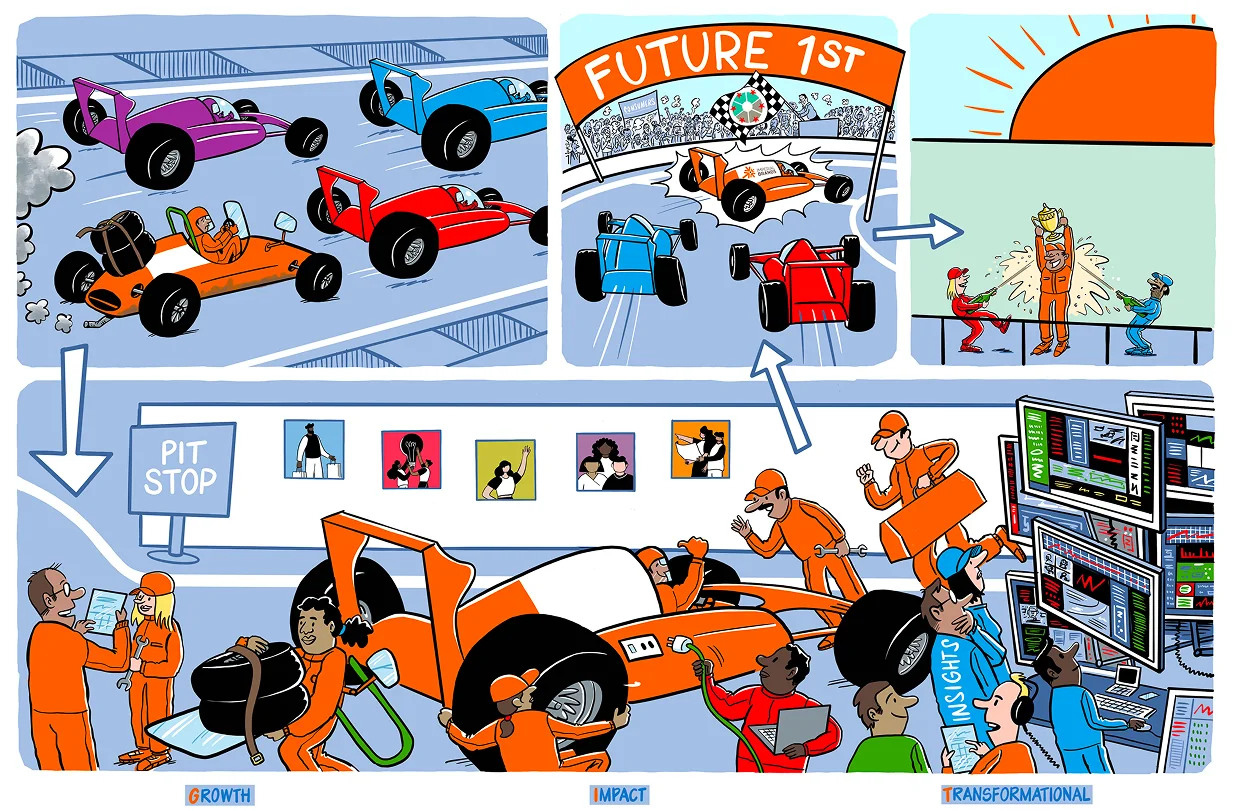
Drawn live in a leadership workshop, drawn for a factory team in two languages, and built as a map people can explore.
Strategic Visualization
We captured complexity in real time, creating clarity and consensus for action.
Strategic Visualization
Our strategic visual helped unite a global retailer's team with a bilingual, baseball-themed illustration that brought their future vision to life.
Design
An interactive representation of the future vision of a major oil company.
In their words
“Ludic Media Studio’s illustrations helped us document our workshops in a fun, engaging and memorable way, giving us content that is great for future presentations and communications.”
Cary NombelaGCO Programme Director, Imperial Brands
“Ludic Media Studio were able to turn complex theoretical concepts into lively illustrations, which is very different from the usual communication tactics and added the ‘wow’ factor to our event and post-event assets.”
Megilia WanAnalyst, World Bank Group
“We also use the visuals to summarize the content in a wrap up, which is much more engaging than sharing slides.”
Renata BlauHead of Operations and Events, Innovation Roundtable
Works well with
Scribe the launch, design the materials, run the campaign — one team, one visual language.
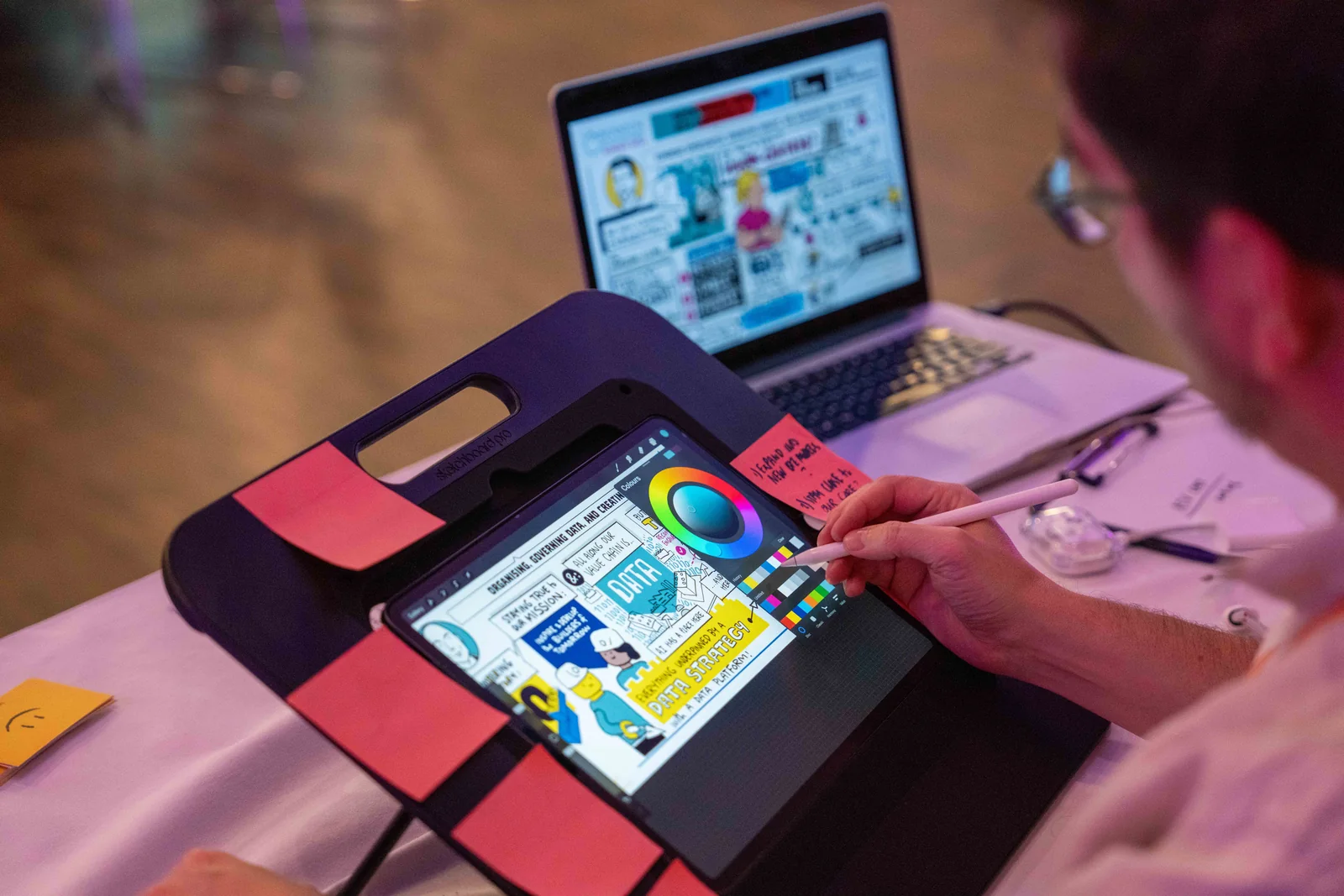
Big ideas, drawn so people remember them.
Complex ideas, designed so people get them at a glance.
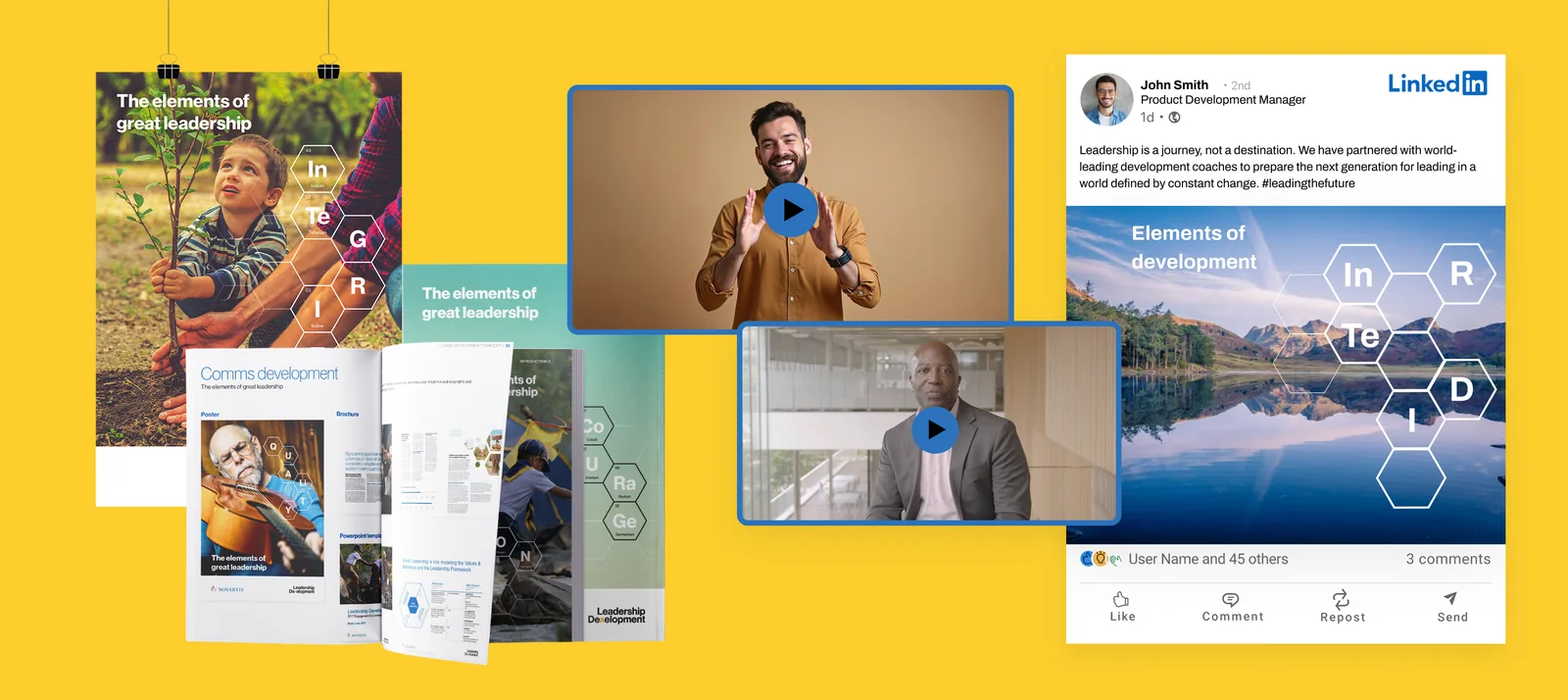
Campaigns people notice, understand and act on.
Questions
Using large-scale visuals — drawn live in a session or created from your briefing materials — to map out ideas, align teams and communicate a complex strategy clearly and memorably. Metaphor, symbolism and story do the heavy lifting, whether you’re mapping a future vision, a transformation roadmap or a new business model.
A vision map shows where you’re going and why. A roadmap shows how you’ll get there, stage by stage. A rich picture shows how a whole system fits together today. Many programs use two or three in one visual language; we’ll suggest the mix in our first conversation.
Yes — in person, digital or hybrid. Our graphic facilitators can design and run the session, or work beside your own facilitator and draw as the group decides. Afterward the boards become finished digital artwork you can share.
The strategy as it stands (the deck is fine), who the map is for, and a conversation with the people who own it. If the strategy is still taking shape, start with a facilitated workshop.
Yes. We plan for it from the first sketch, so the picture carries the story and the labels can change. For a global retailer’s team in the Dominican Republic we delivered the final artwork in English and Spanish.
High-resolution files for print and screen: large-format prints for walls, and versions for slides, the intranet and reports. If the program needs it, the same map can become a film, an interactive map, a game or a campaign.
Ask people. A few questions before and after the rollout — can you name the priorities? can you see where your team fits? — show whether the strategy got through. We can build that check into the plan.
Start a project
Tell us about the strategy and the people who need to act on it. We’ll help you find the story — and the picture.
What you need people to see, understand or do — and who they are.
A lead from our team reads it and brings in the scribes, designers, animators or game designers the brief needs.
A short call about goals, audience, timings and budget, then a proposal with options.