10,000+participants
Gaming
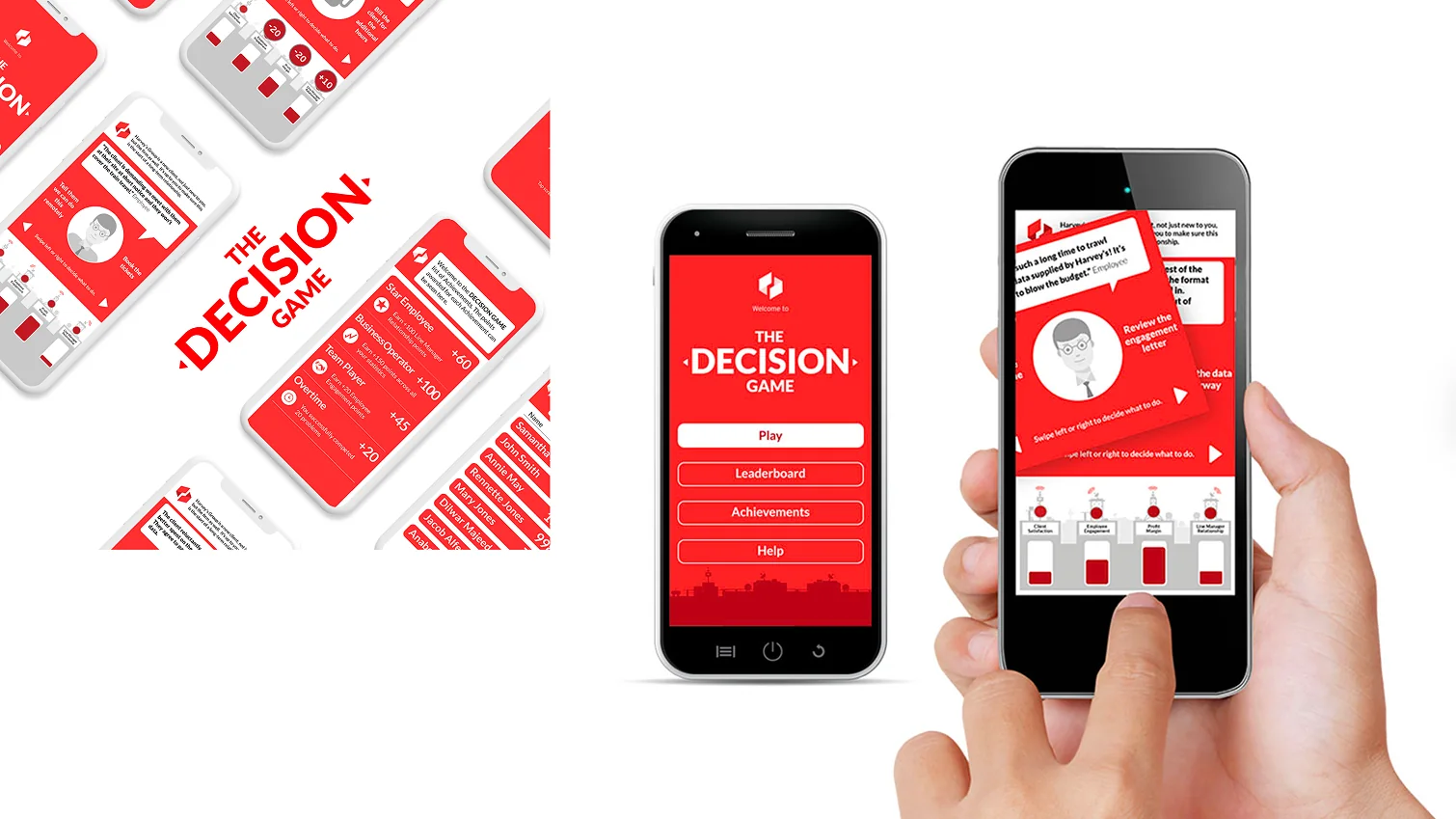
Professional Services Firm – Decision Game
A mobile decision-making game designed to show how individual choices impact firm-wide outcomes.

Games · Digital · Tabletop · Simulations
Our game designers turn strategy, process and behavior into digital games, board and card games, decision games and simulations — so people practice the calls that matter, see what happens, and come back to play again.
Designed by business-literate creatives, and launched by the same studio that makes the films, the pictures and the campaign around them.
Built for 10,000+ participants at a professional services firm, for The Curious Advantage and for teams at Novartis.
Now playing
Why play works
Four large reviews of the research find games beat the usual training on what people know, remember and do. The gains are real but modest — and they grow when people play together, more than once, as part of a wider program. So that’s how we design them.
14%
better at the procedures they were trained in — and 20% more confident — when workplace trainees learned with simulation games, across 65 studies.
77
studies compared serious games with conventional teaching. Games did better on learning and retention — and better still played in groups, over more than one session.
Source: Wouters et al., Journal of Educational Psychology, 2013
3 of 3
kinds of learning outcome improved by gamification in a meta-analysis: what people know, how motivated they are and how they behave.
Source: Sailer & Homner, Educational Psychology Review, 2020
57
comparisons in a review of digital learning games: on average, games beat teaching without them — and games with extra learning support built in did better again.
Source: Clark, Tanner-Smith & Killingsworth, Review of Educational Research, 2016
Games that are played together, played again and part of the program do best. That’s how we build every one.
What we make
Digital or on the table, five minutes or a whole quarter, one player or ten thousand. We choose the format from what people need to learn, decide or do — never the other way around.
Level 01
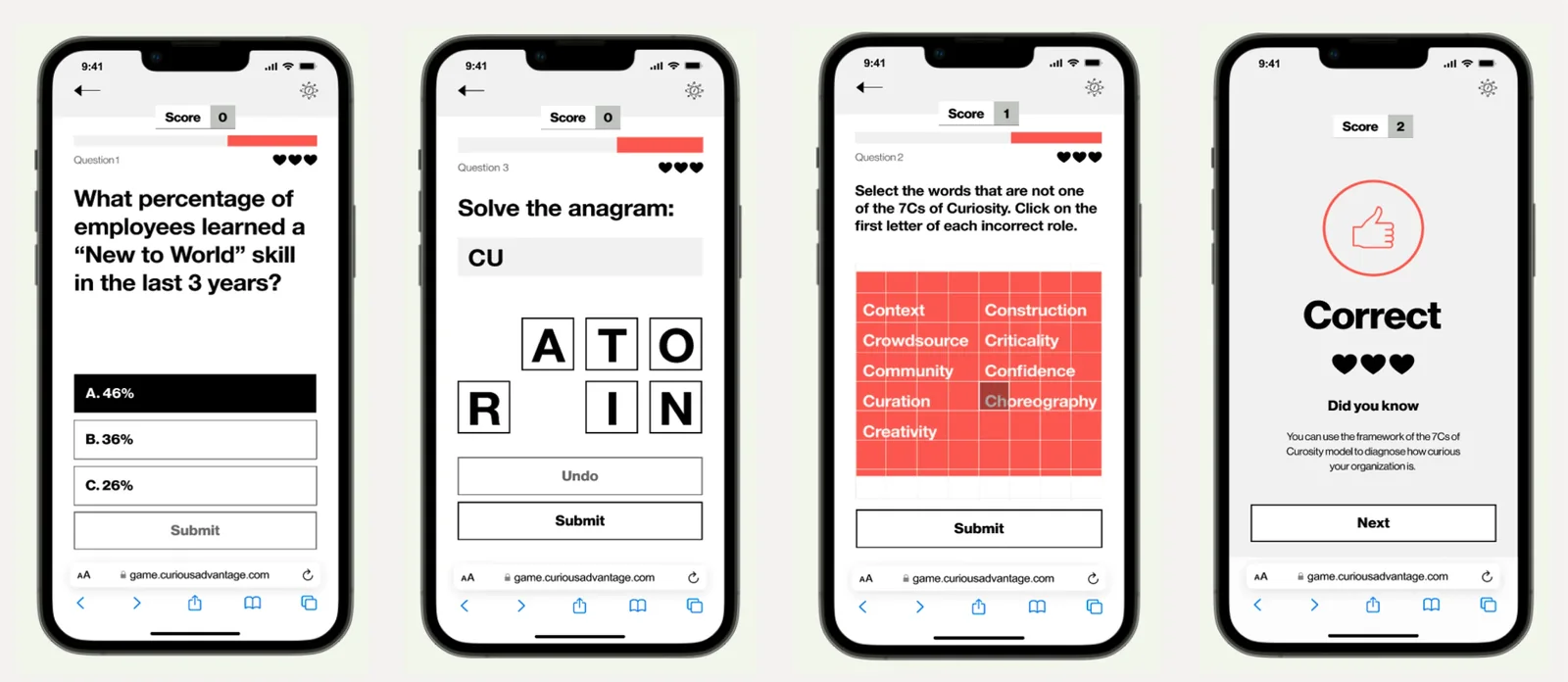
Short rounds with three lives, rising difficulty and a best-streak leaderboard — built for replays, and refreshed from an admin area as your program moves on.
Level 02
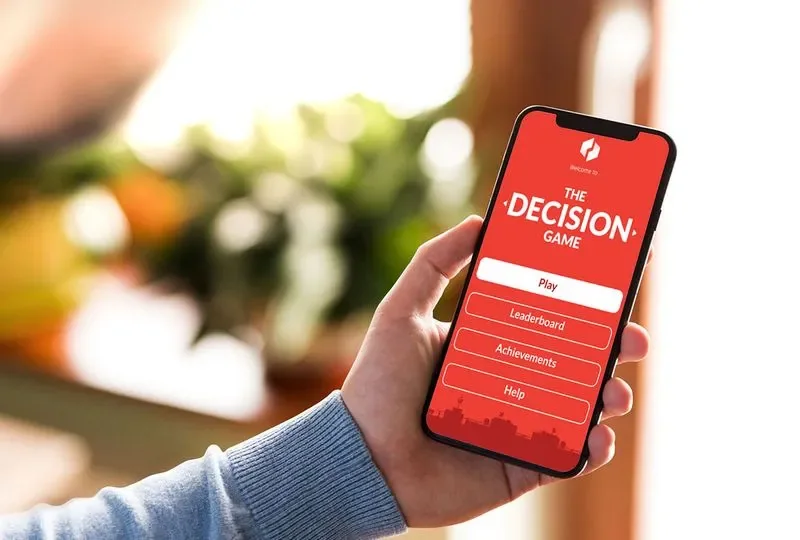
Real situations from the job, a swipe to decide, and scores that move on what matters — client, team, margin. Every decision is tracked, so you see where judgment needs work.
Level 03
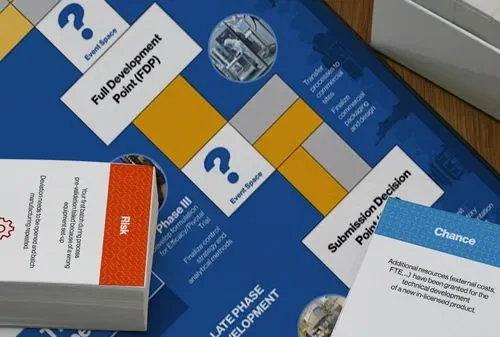
Custom tabletop games that turn a strategy or a process into something teams can play, argue about and master together — social, high-energy and hard to forget.
Level 04
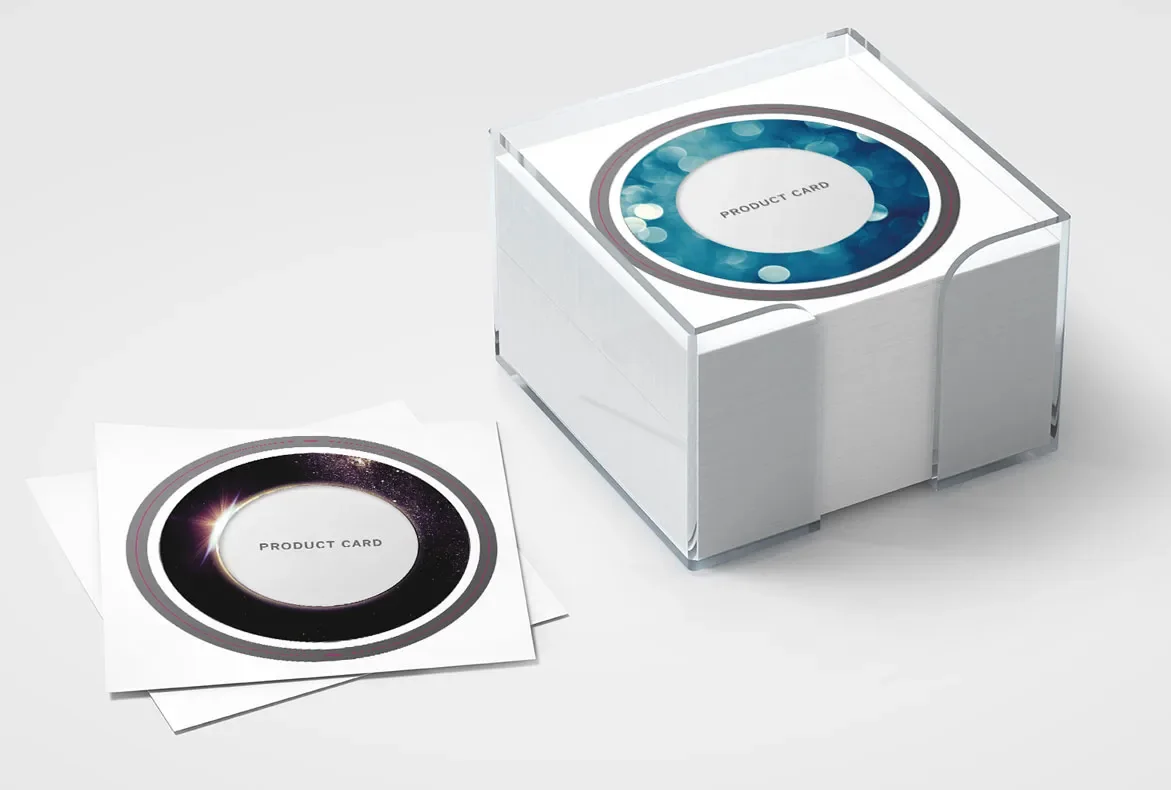
Decks that get people talking honestly about values, behaviors and the customer — with a facilitator in the room, or on their own.
Level 05
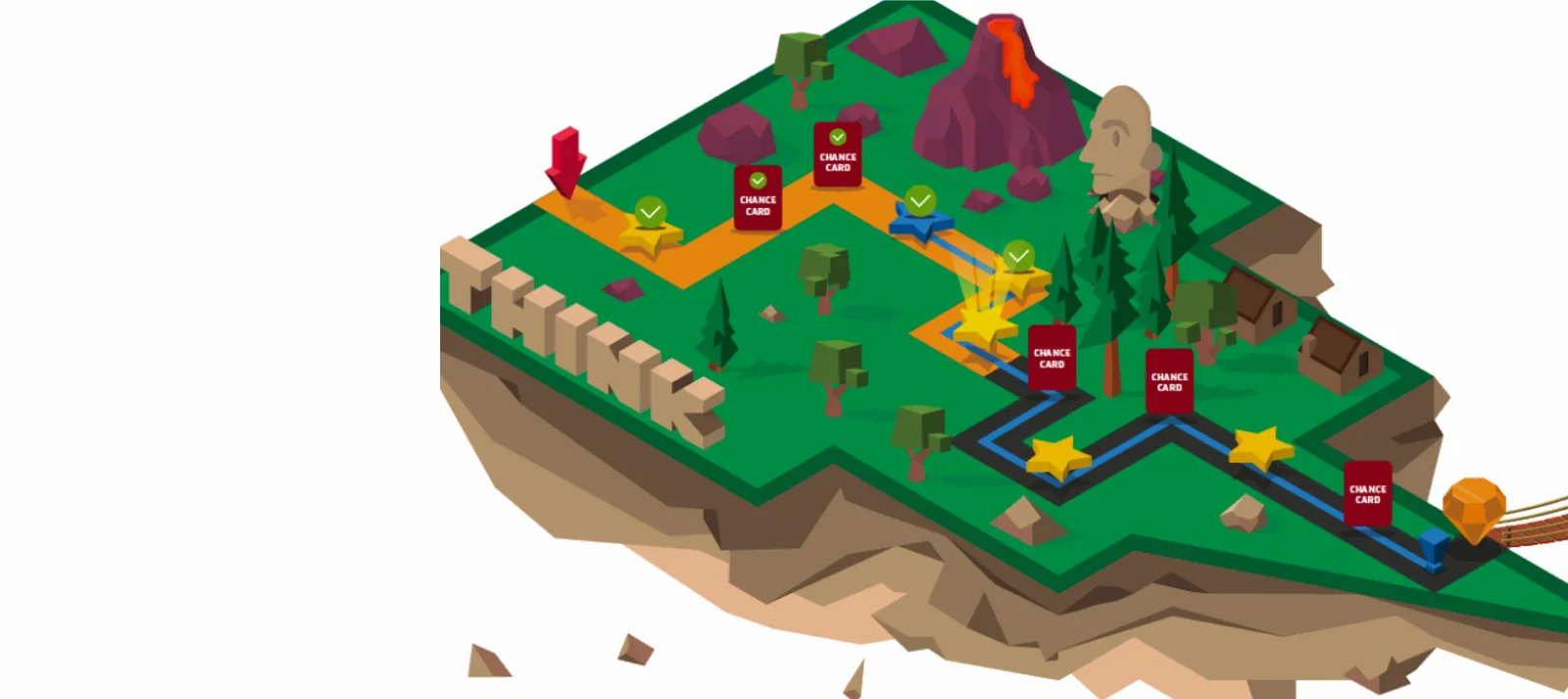
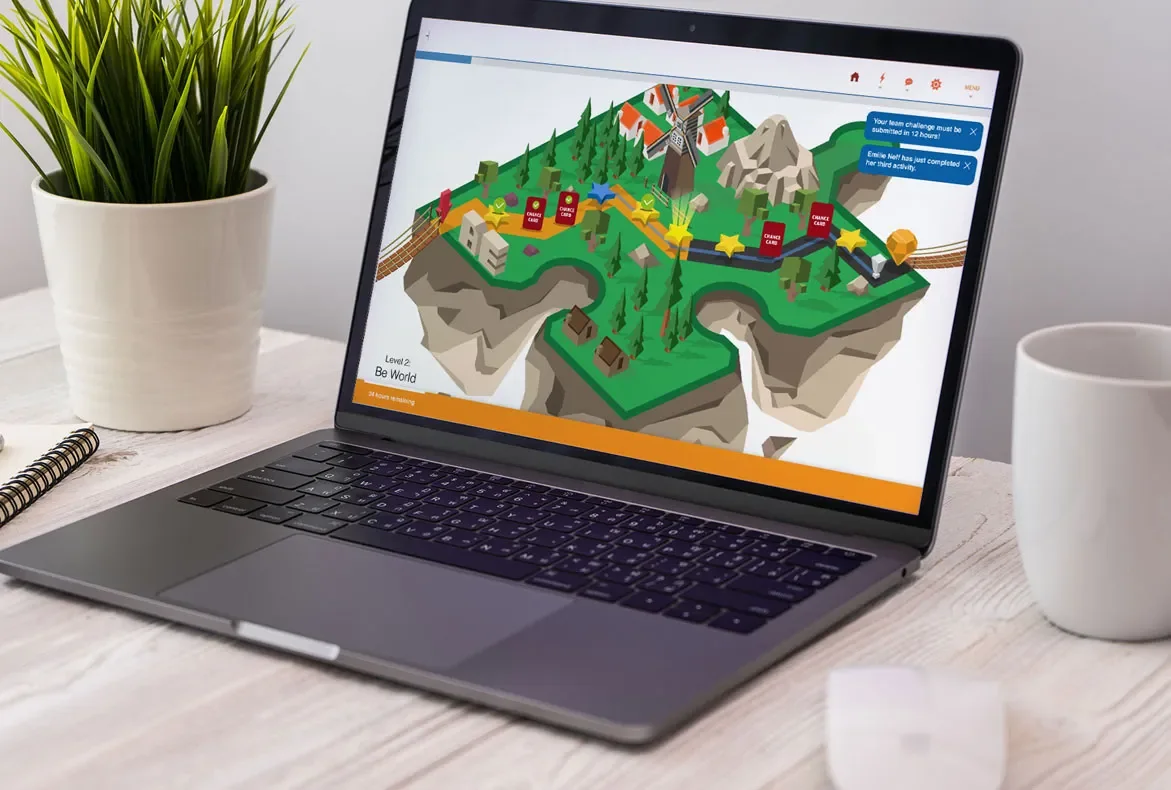
Online games where people and teams progress in parallel, with weekly team challenges and solo tasks that get tougher level by level.
Level 06
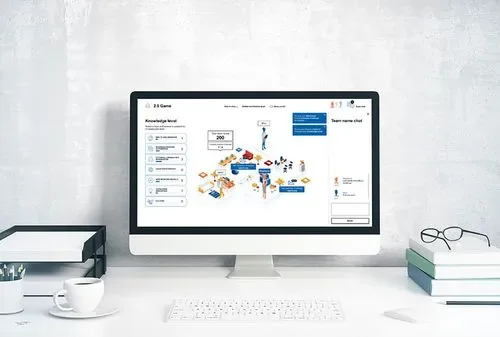
Run the project, the launch or the business for an afternoon, and watch months of consequences play out — in teams, in the room or online.
The play loop
Every game we make runs on one loop: decide, see what happens, talk it through, play again. Take a turn — this situation is from the Decision Game we built for a professional services firm.
Illustrative scores. The situation is from the Decision Game, where every decision is tracked.
1
A real situation from the job, with a real trade-off and no answer handed to you.
In the Decision Game: swipe left or right.
2
Scores move on the things that matter. The consequence is yours, so it sticks.
Client, team, margin, manager.
3
Leaderboards, debriefs and team challenges turn one person’s choice into everyone’s conversation.
In the Decision Game: points and a leaderboard.
4
New situations, harder levels, another go — every round is another session of practice.
Curiosity Game players often replayed several times a session.
Then do it for real. The aim is the next client meeting, not the high score.
Where we’re different
01
Most game studios hand over a standalone product. Ours sits beside filmmakers, animators, designers and visual scribes, so your game launches with a film, a look and a campaign people talk about — and the story keeps going after the last level.
For Novartis, a day of colleagues playing a card game became a film campaign on LinkedIn, YouTube and Instagram.
02
Board and card games for the room, where people argue it out together. Mobile and online games for reach and replay. Or both, designed as one, so the workshop and the follow-up feel like the same game.
Group play and repeat play are where the research finds games work best.
03
We start from the decision, the process or the number that matters — not the game mechanic — and build on your own models and language, so the game teaches the real thing.
Built on The Curious Advantage’s own curiosity models; a decision game for 10,000+ people at a professional services firm.
04
Every decision can be tracked and every replay counted. You see who played, where people hesitate and which topics need another round — evidence for the next step, not just a completion rate.
In the Decision Game, every decision was tracked for analytics on engagement and capability.
How we work
01
What should people do differently after they play? We agree the goal, the audience and how we’ll know it worked.
02
Every strategy, process or decision has trade-offs and consequences. We find them, then pick the format: digital, tabletop or both.
03
Paper prototypes and clickable builds, played early by real people from your organization — then tuned until it’s right and it’s fun.
04
Illustration, writing, design and build, with the same craft as our films and pictures.
05
A launch film, a campaign or a live moment — then new rounds, leaderboards and analytics that bring people back.
The work
10,000+participants
Gaming
A mobile decision-making game designed to show how individual choices impact firm-wide outcomes.
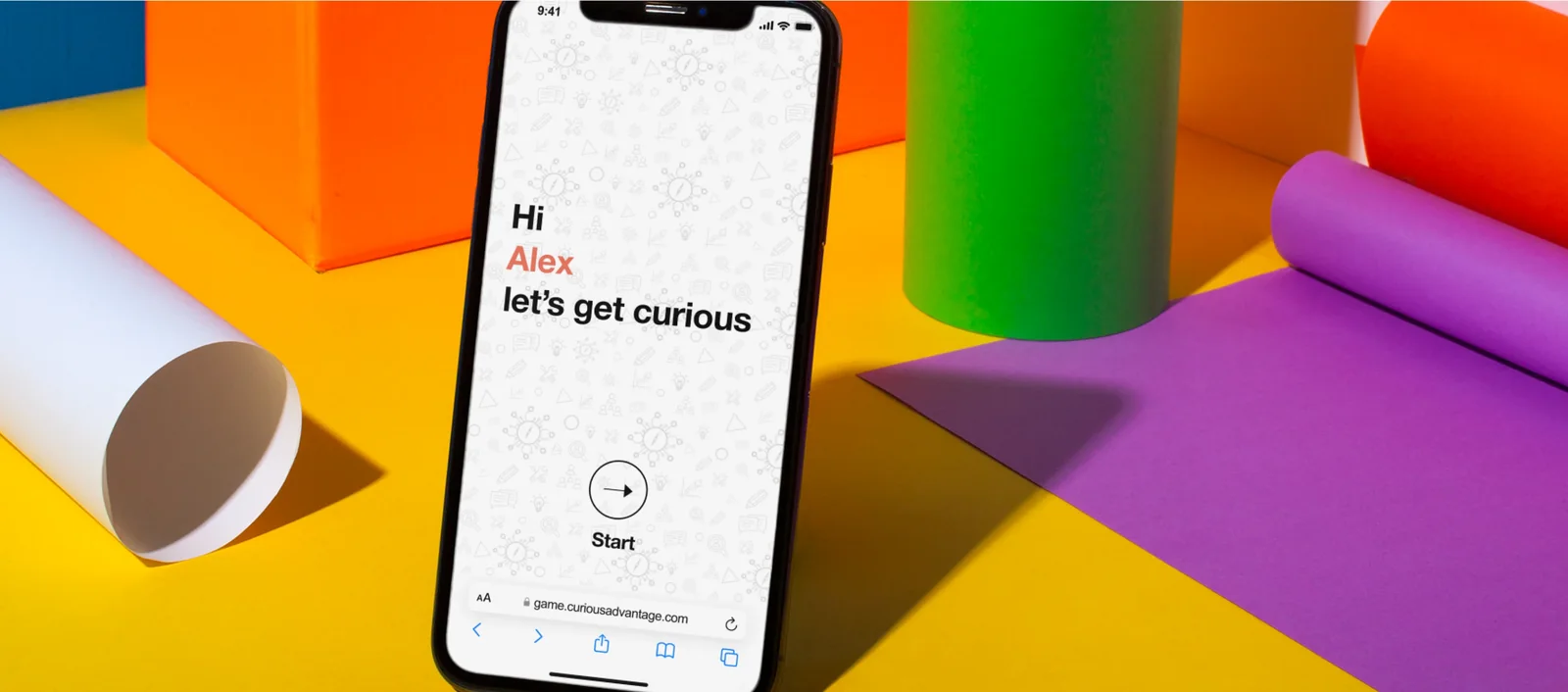
Gaming
A replayable learning game designed to help organizations practice curiosity through play.
Gaming
This state of the art online learning game used storytelling methods and social media to create compelling content that ensures learning material is easy to understand and to apply.
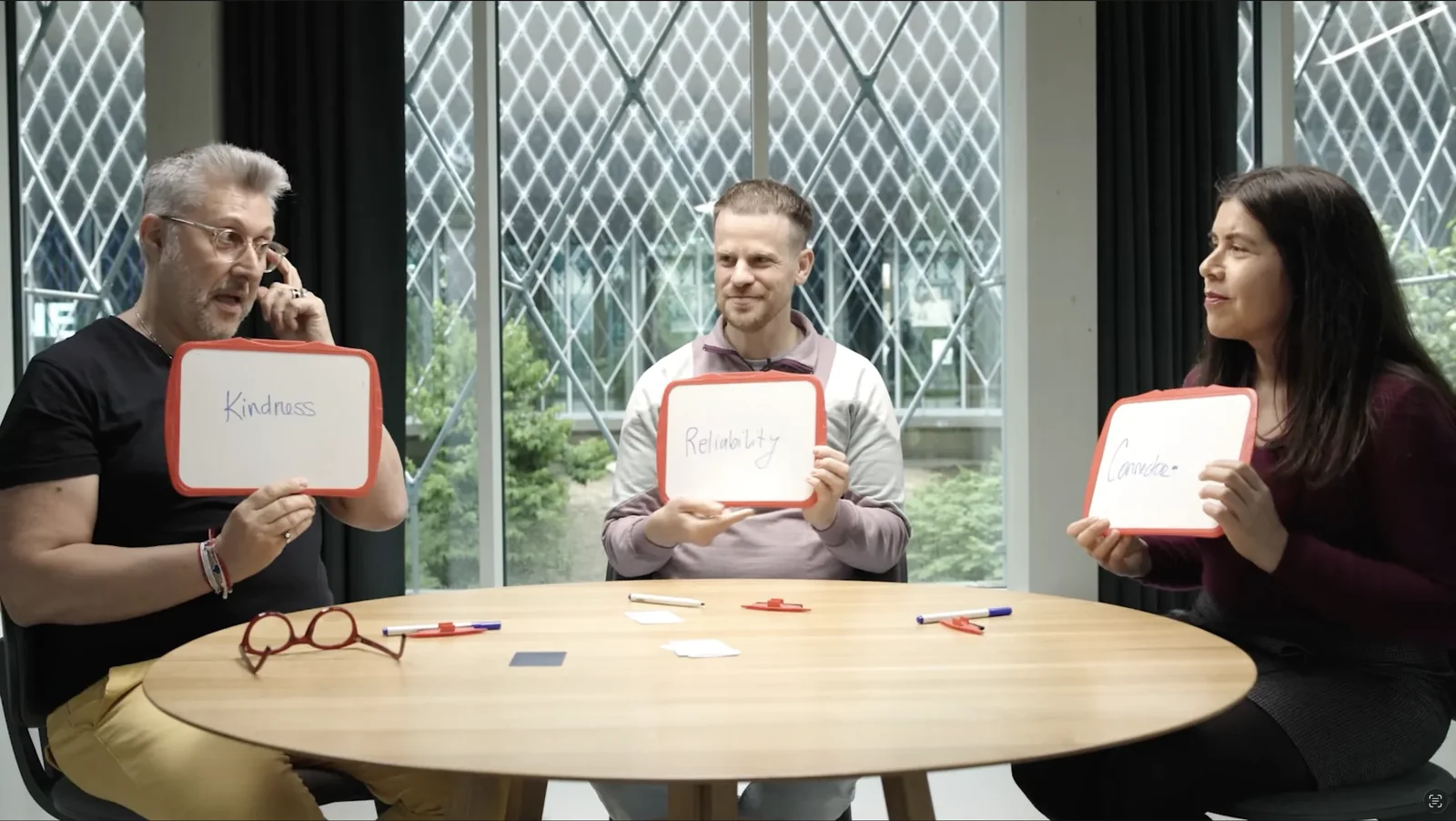
Case study · Novartis
In their words
“The TRD game is brilliant, state-of-the-art! Inspirational, a great learning opportunity.”
ParticipantsNovartis
“We have worked with Ludic Media Studio for almost a decade which is a testament to their brilliance.”
Charlotte OttersonHead of Content, FT Forums
“Ludic Media Studio truly understand the meaning of the word flexibility; interpreting the brief and dealing with last minute requests so that we can deliver the perfect result.”
Dianne MaginnisMD, Global Conference Management
Works well with
A game lands harder with a launch film, a world people recognize and a campaign that keeps them coming back — all from the same team.

Films people want to watch, built to be understood.
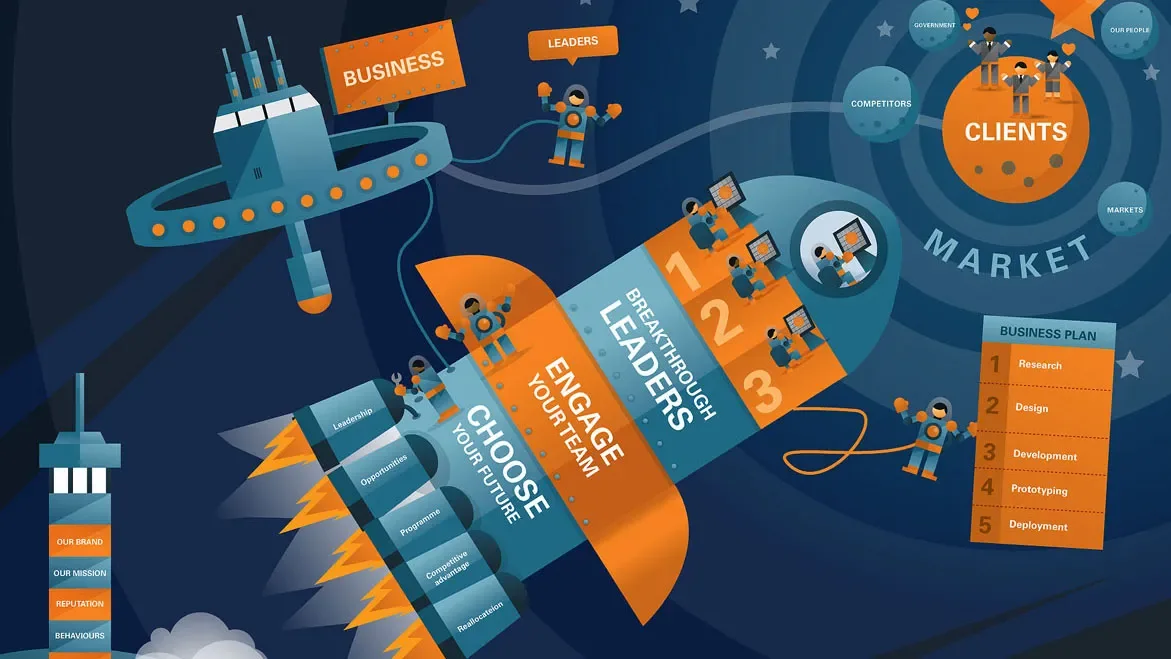
Complex ideas, designed so people get them at a glance.
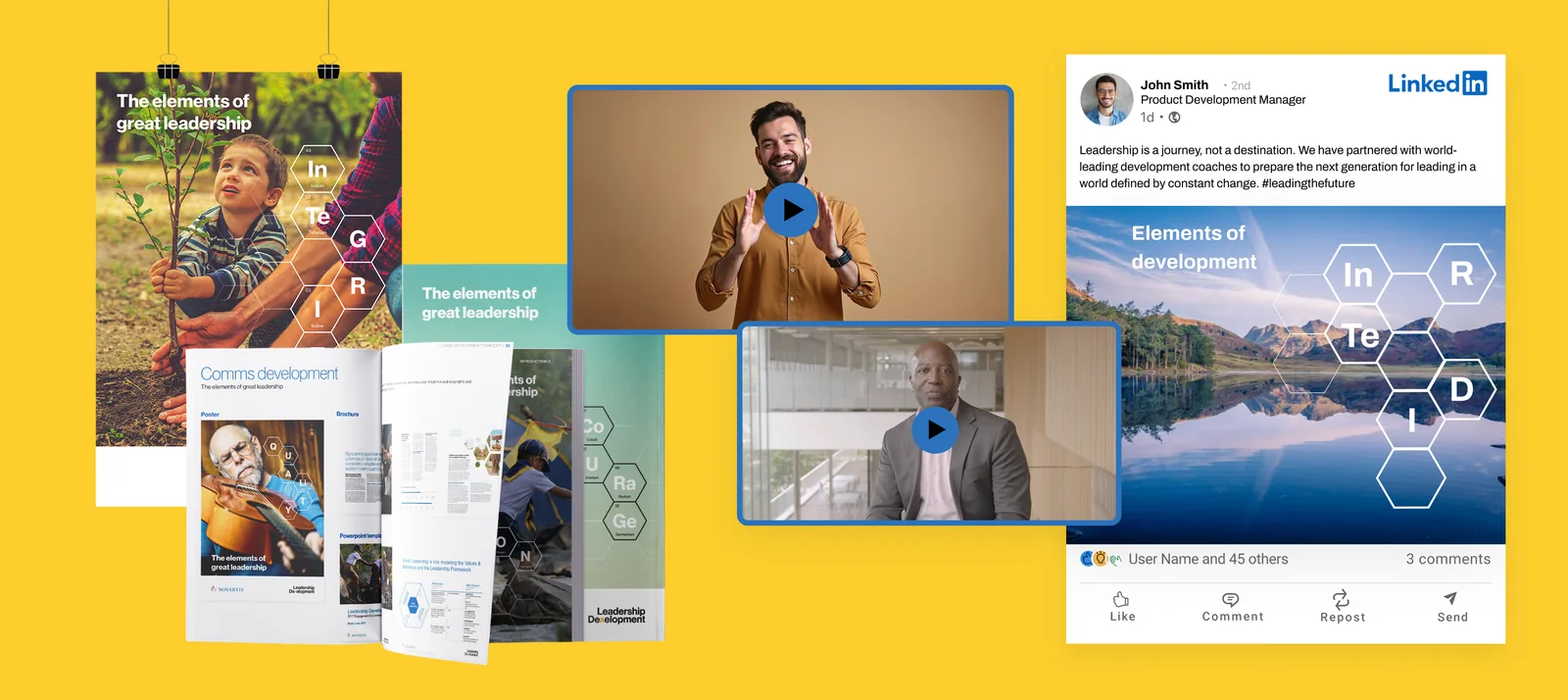
Campaigns people notice, understand and act on.
Questions
Digital games for phone, tablet and laptop; custom board and card games; decision games and quiz games; team challenges and tournaments; and business simulations. Many programs use more than one.
It depends on the goal and the people. Tabletop games are best when people need to talk, argue and decide together in a room; digital games reach thousands and invite replays. Often the strongest answer is both: a table game for the workshop and a phone game for the weeks after.
We start from what people should do differently, build the game around real decisions and their consequences, and playtest it with real people before launch. The research says games work best played in groups, over more than one session and alongside other learning — so that’s how we design them.
Yes. Our digital games can include an admin area, so questions and scenarios can be added, edited and retired as your program moves on.
Digital games can track every decision and replay, so you see engagement and where capability needs focus. For table games we build in debriefs and simple before-and-after checks.
That’s where games are strongest. Our film, design and comms teams can launch it, and Ludic Advisory’s event team can make it the live moment of a conference or offsite — at the table, or on the big screen.
Yes. Our global network of business-literate creatives works with teams wherever they are, and a digital game reaches every time zone at once.
Start a project
Tell us what people need to learn, decide or do differently. We’ll find the game in it.
What you need people to see, understand or do — and who they are.
A lead from our team reads it and brings in the scribes, designers, animators or game designers the brief needs.
A short call about goals, audience, timings and budget, then a proposal with options.